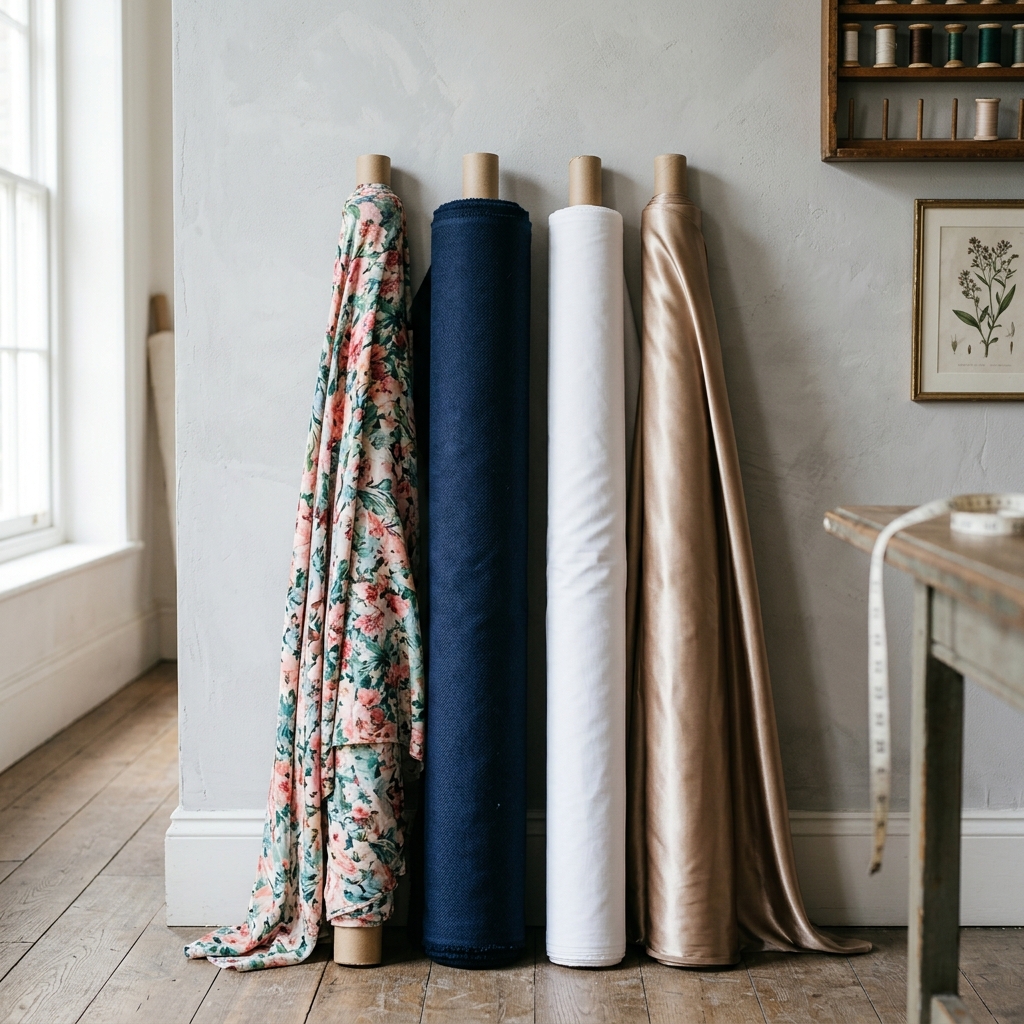
Choosing the right material is 50% of the battle in sewing. You can have perfect measurements and a flawless pattern, but if you choose a fabric that doesn’t “behave” correctly, the final garment will never look quite right.
When it comes to circle skirts, the “drape” of the fabric is the most critical factor. Because the skirt is based on volume and movement, the way the fabric hangs under its own weight determines whether you get a soft, swishy look or a stiff, structured silhouette.
In this guide, we’ll explore the best fabrics for circle skirts across various styles, skill levels, and occasions.
What to Look for in a Circle Skirt Fabric
Before we get to the specific materials, here are the three technical qualities you should consider:
- Drape: This refers to how the fabric hangs. A “high drape” fabric (like silk) falls in soft, narrow folds. A “low drape” fabric (like denim) stands out more stiffly.
- Weight: Lightweight fabrics create more “twirl” but can be flighty. Heavyweight fabrics provide warmth and structure but can be heavy at the waist.
- Grain Stability: Since circle skirts are cut on the bias, fabrics with a loose weave (like coarse linen) will stretch significantly more than tightly woven fabrics (like poplin).
1. Rayon Challis (The Beginner’s Favorite)
If you want that classic, liquid-like “swish,” rayon challis is the gold standard.
- Vibe: Flowy, casual, and incredibly soft.
- Best for: Half and full circle skirts for summer.
- Pro Tip: It’s slippery to cut! Use lots of pins or a rotary cutter.
2. Cotton Lawn or Voile
Lightweight and slightly more “crisp” than rayon, cotton lawn is a joy to sew.
- Vibe: Airy, feminine, and great for prints.
- Best for: Beginner projects and vintage-style sundresses.
- Why we love it: It takes a sharp press from the iron, making hemming a breeze.
3. Linen and Linen Blends
For a more natural, textured look, linen is unmatched.
- Vibe: Earthy, relaxed, and breathable.
- Best for: Midi or maxi skirts.
- Pro Tip: Linen stretches a lot on the bias. Be absolutely sure to let it hang for 48 hours before hemming.
4. Silk or Polyester Satin
If you’re making something for a wedding, prom, or gala, satin is the traditional choice.
- Vibe: Luxurious, shimmering, and high-glamour.
- Best for: Full circle skirts with a lot of volume.
- Warning: It shows every needle mark and water spot, so handle with care!
5. Scuba or Ponte Knit
These are “stable knits” that provide incredible body and don’t fray.
- Vibe: Modern, architectural, and comfortable.
- Best for: Mini skirts or skirts that need to hold a specific shape.
- Pro Tip: You can often leave the hem raw (unsewn) with scuba, which is a huge time-saver!
6. Wool Crepe or Light Suiting
For a professional, office-appropriate circle skirt, look to lightweight wool.
- Vibe: Sophisticated, warm, and professional.
- Best for: Quarter or half-circle skirts for winter.
- Drape: Wool crepe has a beautiful “bounce” that makes circle skirts look high-end.
7. Cotton Poplin
A bit heavier than lawn, poplin has a distinct “rustle” when you walk.
- Vibe: Crisp, clean, and preppy.
- Best for: 1950s style skirts that need to hold a bit of volume.
8. Chiffon or Georgette
These are sheer fabrics that require a lining.
- Vibe: Ethereal, romantic, and sheer.
- Best for: Overlays on formal skirts.
- Handling: Very difficult to sew—only for intermediate or advanced sewists.
9. Chambray or Lightweight Denim
Get the look of jeans with the movement of a skirt.
- Vibe: Casual, rugged, and daily-wear.
- Best for: Quarter-circle skirts or button-down front styles.
10. Taffeta
If you want that dramatic “crunchy” volume seen in high fashion.
- Vibe: Bold, structured, and noisy (in a good way!).
- Best for: Statement evening skirts.
Fabric Comparison Summary
| Fabric Type | Drape Level | Difficulty | Best Style |
|---|---|---|---|
| Rayon Challis | Very High | Medium | Full Circle |
| Cotton Lawn | Medium | Easy | Half Circle |
| Linen | High | Easy-Med | Maxi Skirts |
| Scuba Knit | Low (Structured) | Easy | Mini Skirts |
| Wool Crepe | High | Medium | Office Wear |
Don’t Forget the Lining!
If you choose a sheer or lightweight fabric (like chiffon or light cotton), you will likely need a lining.
- Best Lining Fabrics: Cotton voile, silk habotai, or a lightweight polyester lining.
- Expert Tip: Cut your lining as a half-circle even if your main skirt is a full circle. This reduces bulk and keeps the lining from peeking out during movement.
❓ FAQ SECTION
What is the best fabric for a circle skirt? For a flowy, everyday skirt, rayon challis or cotton lawn are the best choices. For a more structured or formal look, use scuba knit or wool crepe.
How much fabric do I need for a circle skirt? Most adult circle skirts require 2.5 to 3.5 yards of fabric, depending on the length and width of the material. Check our Fabric Yardage Guide for exact calculations.
Can I make a circle skirt out of quilting cotton? Yes, but be aware that quilting cotton is quite stiff. It won’t have a “fluid” drape and might look a bit like a tent if made into a full circle skirt. It works best for half-circle styles.
Do I need to wash my fabric before sewing? Absolutely! Most natural fibers (cotton, linen, rayon) will shrink. Wash and dry the fabric exactly as you plan to treat the finished skirt before you cut it.
🎯 Ready to Buy Your Fabric?
Now that you’ve picked the perfect material, make sure you buy the right amount!
Use our Circle Skirt Calculator to get your exact yardage requirements based on your fabric’s width and your desired skirt length.
If you’re still choosing your silhouette, see our Full vs Half vs Quarter Circle Skirt comparison, or get ready to draft with our Step-by-Step Pattern Guide.